Overview
With new developments arising over the respective regions, here are our market highlights for last week.
China
The course of recovery proceeds, not without bumps along the way
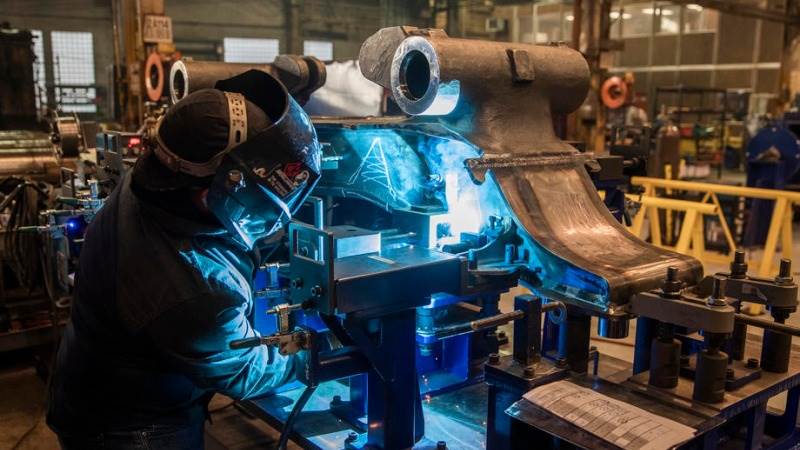
While most major economies are struggling to recover from the COVID-19 pandemic, as evident from the staggering 32.9% drop in US Q2 GDP, the Chinese economy is well on its way of recovery.
This week, the Chinese National Bureau of Statistics announced that the official manufacturing PMI for July was 51.1. This outperforms the analyst consensus of 50.8 and is slightly better than the June reading of 50.9. Meanwhile, the official non-manufacturing PMI stood at 54.2 for July, slightly below the analysts’ expectation of 54.5 and below the June figure of 54.4.
These two announcements signify that both the manufacturing and non-manufacturing PMIs have been over 50 for 5 consecutive months, indicating sustained expansion in factory output and continuous recovery of the Chinese economy. Moreover, these new figures are also in line with the Chinese Q2 GDP announced 2 weeks ago, which stated the Chinese economy has grown by 3.2% from a quarter-to-quarter basis, clearly rebounded from the 6.8% contraction in Q1. Besides, despite the ongoing Sino-US trade war, trade has also shown signs of recovery as Chinese exports have risen by 0.5% in June YoY, mainly due to the exports of face masks to the US.
Hence, given that parts of the Chinese economy have yet to return to full capacity and the US has tried to put pressure on the Chinese economy, the current pace of recovery has surprised many.
However, there are still considerable challenges ahead of China. Exports could slow down in the future as the trade of personal protective equipment and medical supplies to the US, including face masks has slowed in early July despite the fact pandemic was out of control in America at that time. Furthermore, the labour market could remain sluggish as most factory owners are still not expecting to hire more staff over the coming months. This is shown by the employment metric in the manufacturing PMI, which stood at 49.3 for July and was well below the expansion line of 50. The same metric was even worse for non-manufacturing firms, as the number was only 48.1 in July, further down from 48.7 in June.
In addition, China’s historical nationwide flooding since early-June could bring further complications to its recovery. In fact, the Chinese government has estimated that the flood has caused US$16.6 billion of damage, with more than 2 million people displaced along the Yangtze River. This disaster could impede the economic growth of China, as stated by analysts.
In short, while China’s economy has been largely in-line in its recovery, complications from recent floodings, as well as slowing trades and the weakening labour market, could drag down future recoveries.
United Kingdom
Updates on COVID and support schemes
![A commuter wearing a protective face mask at Hammersmith underground station as the spread of the coronavirus disease (COVID-19) continues, in London, the United Kingdom, on March 24, 2020 [Hannah McKay/Reuters]](https://www.aljazeera.com/mritems/imagecache/mbdxxlarge/mritems/Images/2020/3/24/a9dc2c2d56964489b26a2f5b415d386a_18.jpg)
There was a lot of buzz surrounding the introduction of the apprenticeship scheme last month which aims to lower unemployment by increasing work opportunities for the young adults. However, while the idea of it is good, reality paints a different picture as apprenticeships in May were 60% lower compared to last year. This highlights the impact of the lockdown on employers as their ability to carry out workplace training has been limited as many offices still remain closed. On the other hand, there has not been any agreements to extend the existing Coronavirus Job Retention scheme which is due to end in October. Ending it prematurely while the economy has yet to sufficiently recover will only result in a deeper recession which further prolongs the recovery period.
Elsewhere, there was a notable spike in transmission rates in the northern part of England which prompted Health Secretary Matt Hancock to implement a lockdown in a bid to contain the spread. Additionally, Spain is now added into the UK’s quarantine list where travellers coming from those countries will have to serve a mandatory 14-day quarantine upon arrival. Such a move was not welcomed as countries like Spain depend on tourism to keep their economy afloat especially so in this current period.
Next week, the focus will turn to the BoE’s autumn meeting. Market players will be keeping an eye on the option of negative rates as the likelihood of it grows as the domestic situation becomes increasingly dire.
EU
Historic Recession in Europe

At the beginning of the week, European shares fell on Monday as the UK imposed a quarantine on travellers returning from Spain because of a surge in coronavirus cases there.
Later on in the week, we saw several economic indicator announcements. Firstly, Europe’s largest economy, Germany’s quarter on quarter GDP shrank by 10.1% in Q2 of 2020. This is not only worse than expected, but also the largest it has been – even larger than the height of the 2008 Global Financial Crisis.
In France, Italy and Spain, double digit contractions were reported for Q2 this year. France reported a quarter on quarter fall of 13.8%; Spain reported a fall of 12.1% compared to Q1 while Italy reported a 12.4% quarter on quarter fall. The contractions in the aforementioned economies are likened to that of a war, by an economics expert.
All in all, the Eurozone economy contracted by 12.1% in Q2, compared to Q1. As a result, Euro Stoxx 600 closed down by nearly 0.9%, registering its first month-to-date drop in four months.
United States
Economic recovery does not seem quick and easy

Here are some key stats on United States that is published this week:
- Fed decisions to maintain the interest rate paid on required and excess reserve balances at 0.10 percent, effective July 30, 2020.
- US July Markit PMI increased to 51.3% from the previous month of 49.3%
- US July Markit Services PMI increased to 49.65 from the previous month of 47.9%
- Initial jobless claims increased to 1.4 million from the previous month of 1.3 million
- US existing home sales increased to $4.72 million from the previous month of $3.91 million.
While the US economy is recovering, the sharp V recovery which market players were initially expecting is nowhere in sight. Sunbelt states which account for 50% of the entire population have halted the reopening of their economies due to large spikes in COVID cases. This is dire news as these states are the major contributors to the US GDP and this means that economic activity would once again be adversely affected. Unsurprisingly, Q2 GDP came in at -32.9% SAAR and initial jobless claims increased to 1.4 million up from the previous 1.3 million.
In response, the Fed has left all policy instruments untouched in the latest FOMC meeting with the fed funds rate still within the targeted range of 0-0.25%. Such a decision seems to have assured market players that policy tightening isn’t going to happen anytime soon and more support will be provided if necessary. Overall, the Fed is expected to continue to remain in an ultra accommodative mode for as long as the economy requires it to be.
 The M Word