Overview
With new developments arising over the respective regions, here are our market highlights for last week.
Hong Kong
National Security Law

This week, Hong Kong underwent one of its most radical changes since its handover in 1997 as Beijing lawmaker passed the National Security Law in the former British colony without prior notice. The law, according to Beijing, aims to stop and punish acts of secession, subversion, terrorism, and collusion with foreign forces. Law offenders could face up to life imprisonment which is the heaviest form of punishment in Hong Kong.
While pro-China politicians and Beijing have emphasized that the aim of the law is to enforce peace and stability in the city, others remain doubtful over its actual implication on Hong Kong’s economy. As the law could be “up to interpretation” and extends to non-Hong Kong residents, some believe it could instead initiate a mass exodus of foreign capital and expats as firms may try to reduce political risks that they could face in the city. Meanwhile, it is important to consider that Hong Kong’s stock market is primarily dominated by mainland Chinese firms in terms of market capitalization and trading volume. As the new law brings minimal changes to the existing fundamentals of mainland Chinese firms, whether it would have a significant impact on Hong Kong’s stock market remains debatable.
China
New Swine Flu Sparks Worries
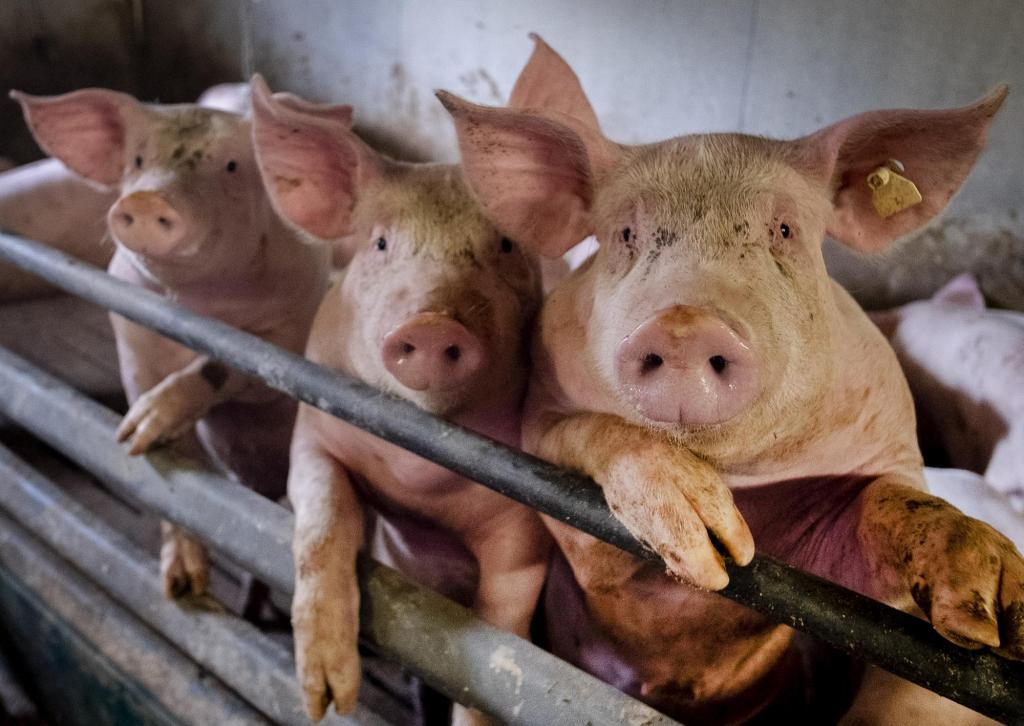
Scientists have identified strains of new flu that has the potential to become a pandemic, according to a study released on Monday. This new strain of influenza is carried by pigs, but can also spread and infect humans.
While this may not be an immediate threat since it has not been transmitted between humans, the flu has a mix of strains that are similar to that from the 2009 H1N1 and can become infectious. If not monitored carefully, the transmission of the flu from pigs to humans can lead to serious infections and, in the worst case, even death.
United Kingdom
Trade Talks Break Down Over Serious Divergences

Last Monday marks the first day UK and EU officials meet since March to resume Brexit talks in Brussels. The UK stood firm on its decision of rejecting an extension for the transition period after the official deadline passed on Tuesday. Unfortunately, talks ended a day earlier as both sides reached a deadlock over divergences in trade, law enforcement, and fisheries. The EU is adamant that the UK commits to a level-playing field for all. Moreover, the former wants the European Court of Justice to be the main arbiter of rules in which the UK dismissed citing a fundamental breach to their sovereignty. Notably, the UK parliament passed an immigration bill ending the freedom of movement for EU citizens in the UK. Talks will resume next week in London and we will continue to monitor the situation closely.
On the other hand, the Covid-19 situation in the UK has improved as weekly deaths fell to their lowest in 12 weeks just as the second phase of lockdown has begun. The following weeks will remain crucial as to whether we will see a similar situation to that of the US.
EU

Last week was a slew of releases of key German economic data. Unemployment increased minimally to 6.4% reflecting the effectiveness of the extensive job support programs meted out by the state. German PMI rose to a three-month high of 45.2 beating market expectations albeit it is still in contractionary territory.
In regards to the EU recovery fund, the EU saw little developments and has yet to come to a consensus. In particular, the “frugal four” – Austria, Denmark, Sweden, and Netherlands are putting up a fierce fight against the fund while Germany and France have been pushing for it. Despite having a tentative framework, they remain split over details such as the size of the fund, the balance of grants as opposed to loans, how the money is divided up, the duration of the plan, starting date for repayments of borrowed money as well as the process for monitoring how the fund is spent and reform programs that recipients are meant to put in place as part of the deal. Whether the bloc will be able to push this program through remains integral to the overall integration of the region.
USA
US COVID – 19 surge as economy reopens

The number of daily infections in the United States had reached its peak (57 232 cases) on Thursday, 2nd July 2020. At the same time, the US government published an outstanding performance on its non-farm payroll. The US non-farm payroll was reported to be 4.8 million which managed to top the expectations of 3 million. Hospitality and leisure are the sectors where employment rose significantly which caused the better than expected Non-farm payrolls. However, this report is based on the second week of June. Consequently, the US stocks continued their rise as Nasdaq recorded an all-time high. Nevertheless, this implied that there may be an overbuy in the market due to the non-farm payroll and retail investors should be aware of any corrections happening this week. This is due to the fact that as the non-farm payrolls came out they were followed by a spike in the virus and a reversal of economic reopening in a number of states including California, Florida and Texas.
Goldman Sachs has reduced the US GDP Forecast and sees a 4.6% contraction which is an increase to its initial 4.2%. With an increase in cases which should reduce consumer spending this month and the next as well as newly imposed restrictions and a halt or reversal in the economy reopening being major factors. This phenomenon has brought us to the realization that the US economy may still have certain stumbling blocks ahead. However, due to examples of successful restriction easing in Europe, there is hope that the US can reopen in September this view is aided with talks of a vaccine which could come out later this year as well. It will be interesting to see whether retail investors will remain bullish about the market or with this new information will we see the stock market finally reacting in the way bearish institutional traders have been predicting.
 The M Word